
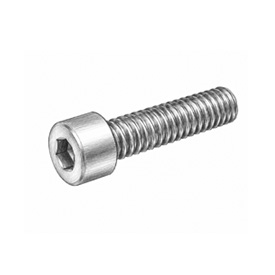
Titanium Screws Engineering Selection Guide
Titanium screws are selected when an assembly needs more than basic fastening. In demanding environments, the screw must carry load, resist corrosion, maintain dimensional stability, reduce weight, and remain reliable through installation, service, inspection, and maintenance.
This engineering selection guide is written for OEM buyers, engineers, purchasing teams, equipment manufacturers, and industrial distributors who need to specify titanium screws for real working conditions. It explains the main technical factors that affect material selection, screw design, thread performance, surface finish, torque control, corrosion behavior, and custom manufacturing.
For available products, visit our Titanium Screws category page or review related product pages including TA2 Phillips Round Head Machine Screw, TC4 Flat Point Set Screw, etc. For material comparison, see our Titanium Screw Material Grades page.
When Titanium Screws Are the Right Choice
Titanium screws are commonly used when stainless steel, carbon steel, brass, or aluminum fasteners do not provide the required balance of corrosion resistance, strength, weight reduction, and service life. In many applications, titanium is chosen not because it is the cheapest material, but because failure, corrosion, replacement, or downtime would be more expensive.
Engineering Factors That Should Be Confirmed Before Ordering
A titanium screw should not be specified by size alone. Before confirming production, engineers and buyers should define the working environment, mechanical requirements, mating parts, installation method, and inspection requirements. The most important selection factors are:
- Material grade: Grade 2, Grade 5, Grade 7, Grade 12, Grade 23, or another specified titanium alloy
- Mechanical load: tensile load, shear load, preload, vibration, fatigue, and safety factor
- Corrosion environment: seawater, chloride, acids, alkalis, temperature, humidity, and outdoor exposure
- Thread specification: metric, UNC, UNF, coarse thread, fine thread, full thread, or partial thread
- Head and drive type: socket head, flat head, button head, hex head, flange head, Torx, Phillips, slot, or custom drive
- Surface condition: polished, passivated, anodized, coated, lubricated, or as-machined
- Installation method: tightening torque, lubrication, anti-seize compound, and assembly sequence
- Quality requirements: material certificate, inspection report, dimensional report, surface inspection, RoHS, REACH, or customer-specific documentation
Titanium Screw Material Selection
Material grade is the foundation of titanium screw performance. Different grades have different strength, ductility, corrosion resistance, machinability, and cost.
Grade 2 Titanium Screws
Grade 2 is commercially pure titanium and is often selected for corrosion-resistant screws. It offers excellent performance in seawater, marine hardware, chemical equipment, desalination systems, heat exchangers, and general industrial service. Grade 2 is suitable when corrosion resistance and ductility are more important than maximum tensile strength. It is a practical choice for many marine and chemical applications.
Explore our products: Titanium Button Head Socket Screws, Titanium Flat Head Socket Screws, TA2 Phillips Round Head Machine Screw
Grade 5 Titanium Screws
Grade 5, also known as Ti-6Al-4V, is the most widely used high-strength titanium alloy. It is chosen when the screw must provide higher tensile strength while keeping the assembly lightweight. Grade 5 titanium screws are commonly used in aerospace, automotive performance, racing, bicycles, machinery, robotics, precision assemblies, and high-load applications.
Explore Grade 5 products: Titanium Flat Head Socket Cap Screws, TC4 Flat Point Set Screw
Grade 7 Titanium Screws
Grade 7 is a commercially pure titanium alloy with palladium added for improved corrosion resistance in certain aggressive chemical environments. It is often used in chemical processing equipment, acid handling systems, reaction vessels, and severe corrosion service.
Explore Grade 7 products: Flanged Head Titanium Screw
Grade 12 Titanium Screws
Grade 12 contains nickel and molybdenum, giving it a useful combination of strength and corrosion resistance. It is often specified for industrial systems, heat exchangers, marine equipment, and chemical processing components.
Grade 23 Titanium Screws
Grade 23, also known as Ti-6Al-4V ELI, is used where high reliability, improved toughness, and stricter material control are required. It is common in medical-related, precision, and high-performance applications. For medical projects, the buyer should confirm the required standard, traceability, testing, and regulatory documentation before production.
For a detailed material comparison, visit our Titanium Screw Material Grades guide.
Strength, Preload, and Load Direction
Titanium has an excellent strength-to-weight ratio, but the correct screw design still depends on the direction and type of load. A screw that performs well in static tensile loading may not be suitable for cyclic vibration, impact, side loading, or repeated disassembly. When specifying titanium screws, confirm whether the application involves:
- Tensile load along the screw axis
- Shear load across the screw body
- Combined tensile and shear load
- Vibration or impact
- Fatigue loading over many cycles
- High preload requirement
- Frequent assembly and disassembly
For high-load applications, Grade 5 titanium is often selected because of its higher tensile strength. For corrosion-critical applications with moderate load, Grade 2 or Grade 12 may be more appropriate. If the screw is safety-critical, the final selection should be reviewed with the mating component design, thread engagement length, load case, tightening method, and applicable engineering standard.
Thread Design and Engagement Length
Thread design has a direct effect on joint strength, assembly quality, and service reliability. Titanium screws can be produced with standard metric threads, UNC threads, UNF threads, fine threads, coarse threads, and custom threads according to drawings. Important thread factors include:
- Thread standard and tolerance class
- Full thread or partial thread
- Thread engagement length in the mating part
- Material of the internal thread
- Whether the joint will be assembled once or repeatedly serviced
- Whether locking elements, inserts, nuts, or washers are required
Fine threads can provide better adjustment and higher resistance to loosening in some applications, while coarse threads are often easier to assemble and more tolerant of contamination or softer mating materials. The best choice depends on the joint design and service environment. For custom assemblies, send us your drawing and mating material information. We can review whether [Custom Titanium Screws] or standard [Titanium Machine Screws] are more suitable.
Torque, Lubrication, and Galling Prevention
Titanium fasteners require proper installation practice. Titanium can be more prone to galling than some conventional fastener materials, especially when titanium threads contact titanium, stainless steel, or other similar materials under high friction. To reduce galling risk, consider the following measures:
- Use suitable lubrication or anti-seize compound where allowed by the application
- Avoid dry installation for high-load or repeated assembly conditions
- Use controlled tightening methods instead of uncontrolled impact tightening
- Confirm surface finish and thread quality before assembly
- Use compatible nuts, inserts, or washers where appropriate
- Avoid over-tightening beyond the design requirement
Torque values should not be copied blindly from steel fasteners. Titanium grade, screw size, thread pitch, lubrication, washer type, mating material, and surface condition all affect the relationship between torque and preload. For production assemblies, the tightening process should be validated through testing or engineering calculation. If your project requires torque guidance, provide the screw size, titanium grade, mating material, lubrication condition, and target preload.
Corrosion Resistance and Galvanic Corrosion
One of the main reasons buyers choose titanium screws is corrosion resistance. Titanium performs very well in many chloride and seawater environments because it forms a stable protective oxide film. This makes titanium fasteners valuable in marine hardware, desalination equipment, heat exchangers, chemical plants, and outdoor equipment. However, corrosion performance depends on the full assembly environment. Engineers should consider:
- Chemical medium and concentration
- Temperature and pressure
- Seawater or chloride exposure
- Wet and dry cycles
- Crevice conditions
- Contact with dissimilar metals
- Electrical conductivity of the environment
Galvanic corrosion can occur when titanium is connected with a different metal in an electrolyte such as seawater. The risk depends on the material combination, exposed surface area ratio, electrolyte, coating condition, and service design. Insulating washers, coatings, sealants, or controlled material pairing may be required in some assemblies.
For application examples, see our Titanium Screws Applications page.
Surface Finish and Coating Options
Surface finish affects corrosion behavior, appearance, friction, cleanliness, and installation performance. Titanium screws can be supplied with different surface conditions depending on the application.
- As-machined finish for functional industrial parts
- Polished finish for cleaner appearance and smoother surface
- Passivated surface for improved cleanliness and corrosion stability
- Anodized titanium screws for color identification or appearance
- Coated or lubricated screws for specific assembly requirements
- Custom surface treatment according to buyer specification
For marine, chemical, and precision applications, surface cleanliness and thread finish are especially important. For decorative or consumer-facing applications, appearance consistency may also be part of the acceptance standard.
Related products: Titanium Flat Head Screws
Head Type and Drive Selection
The head and drive style should match the assembly space, tool access, required clamping force, appearance, and maintenance method. Common titanium screw types include:
- Titanium socket head cap screws for high-strength industrial assemblies
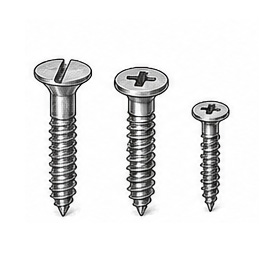
- Titanium flat head screws for countersunk and flush-mount designs
- Titanium button head screws for low-profile appearance and moderate load
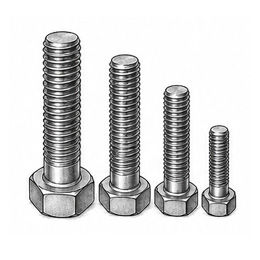
- Titanium hex head screws for wrench-accessible industrial fastening
- Titanium flange screws for larger bearing surface and assembly efficiency
- Titanium self tapping screws for sheet metal, plastic, or light-duty fastening applications
- Custom titanium screws for non-standard head, drive, thread, length, or shoulder design
If the assembly has limited tool access, vibration, soft mating material, or repeated maintenance, the drive and head style should be selected carefully.
Product links: Titanium Allen Socket Head Cap Screws, Titanium Flat Head Screws.
Manufacturing and Quality Control Considerations
Titanium screw manufacturing requires control of raw material, forming or machining process, thread quality, surface finish, and inspection. For B2B orders, buyers should confirm the required documentation before production.
Custom titanium screws can be manufactured according to drawings, samples, or international standards. For non-standard screws, the drawing should clearly show material grade, thread specification, tolerance, head type, drive type, length, diameter, surface finish, quantity, and inspection criteria.
Titanium Screw Selection Table
| Engineering Requirement | Recommended Direction | Common Product Links |
|---|---|---|
| Maximum corrosion resistance in general marine service | Grade 2 or Grade 12 | Titanium Socket Head Cap Screws |
| High strength and low weight | Grade 5 | Grade 5 Titanium Screws |
| Severe chemical corrosion environment | Grade 7 or application-specific grade | Grade 7 Titanium Screws |
| Precision or medical-related requirement | Grade 23 with traceability | Grade 23 Titanium Screws |
| Flush surface assembly | Use countersunk or flat head design | Titanium Flat Head Screws |
| Low-profile visible assembly | Use button head design | Titanium Button Head Screws |
| Custom equipment or special drawing | Confirm custom manufacturing route | Custom Titanium Screws |
FAQ: Titanium Screws Engineering Selection
How do I choose the right titanium screw grade?
Start with the working environment and load requirement. Grade 2 is often used for corrosion resistance, Grade 5 for high strength, Grade 7 for severe chemical corrosion, Grade 12 for combined industrial corrosion resistance and strength, and Grade 23 for high-reliability precision or medical-related applications.
Can titanium screws replace stainless steel screws?
In many applications, yes. Titanium screws can offer better corrosion resistance and lower weight than stainless steel. However, the design should consider strength, thread engagement, galvanic corrosion, cost, and installation method before replacement.
Do titanium screws need anti-seize compound?
Anti-seize compound or suitable lubrication is often recommended, especially for high-load assemblies, titanium-to-titanium threads, stainless steel mating threads, or repeated installation. The final choice depends on the application and cleanliness requirement.
Are titanium screws suitable for seawater?
Titanium has excellent corrosion resistance in many seawater and chloride environments. Grade 2 and Grade 12 are commonly used for marine applications, while the final selection should consider load, temperature, crevice conditions, mating metals, and design life.
What information is needed for custom titanium screw quotation?
A drawing or sample is best. If no drawing is available, provide the screw type, material grade, diameter, thread pitch, length, head style, drive style, surface finish, quantity, application, and required certificates.
Work With a Titanium Screw Manufacturer
As a 33-year fastener manufacturer and exporter in China, we supply titanium screws for OEM buyers, industrial distributors, equipment manufacturers, and engineering projects. We support standard titanium screws and custom titanium screw manufacturing according to drawings, samples, or application requirements.
Send us your drawing, grade, size, quantity, surface finish, and working environment. Our team will help you select the suitable titanium screw material, design, manufacturing process, and inspection plan for your project.