
Titanium Screws Applications
Titanium screws are used where ordinary fasteners cannot deliver the required balance of corrosion resistance, strength, weight reduction, and long-term reliability. In many industrial assemblies, the fastener is small compared with the complete equipment, but its performance can determine whether the whole system remains safe, clean, and serviceable after years of use. For B2B buyers, the value of titanium screws is not only in the material itself. The right titanium grade, head type, thread form, surface finish, and manufacturing tolerance must match the actual application. Marine equipment, chemical processing systems, aerospace assemblies, medical devices, racing components, electronics, and precision machinery all use titanium screws for different reasons.
As a 33-year fastener manufacturer and exporter in China, we supply titanium screws for standard and custom applications. Here the guide explains where titanium screws are commonly used, why they are selected, and how related product such as Titanium Socket Head Cap Screws, Titanium Flat Head Screws, Titanium Button Head Screws, Titanium Hex Head Screws, can be matched with different industries. For material selection, see our Titanium Screw Material Grades guide. For technical design considerations such as torque, galling, corrosion, thread engagement, and surface finish, visit our Titanium Screws Engineering Selection Guide.
Titanium Screws for Marine and Offshore Equipment
Marine environments are among the most demanding places for fasteners. Screws may be exposed to seawater, salt spray, wet and dry cycles, vibration, UV exposure, and contact with different metals. Stainless steel fasteners can perform well in many marine applications, but in severe chloride environments, crevice corrosion, staining, or service-life limitations may lead engineers to consider titanium.
Titanium screws are widely used in boat hardware, deck equipment, underwater components, offshore instruments, desalination equipment, marine sensors, pumps, valves, and exposed fastening points where long-term corrosion resistance is essential. Grade 2 titanium screws are often used when corrosion resistance and ductility are more important than maximum strength, while Grade 12 may be considered where additional mechanical performance is needed.
In marine assemblies, the surrounding materials should also be reviewed. Titanium may be used with stainless steel, aluminum, composites, or engineering plastics, and galvanic corrosion should be considered when dissimilar metals are exposed to seawater. For many projects, Titanium Marine Screws, Titanium Socket Head Cap Screws, and Titanium Flat Head Screws provide practical fastening options for corrosion-resistant assemblies.
Titanium Screws for Chemical Processing Equipment
Chemical processing equipment often requires fasteners that can withstand aggressive media, high humidity, cleaning chemicals, temperature changes, and long operating cycles. When a screw is used near acids, chlorides, process fluids, or corrosive vapors, material selection becomes a critical engineering decision. Titanium screws are commonly used in reactors, pressure vessels, pumps, valves, heat exchangers, piping systems, filtration equipment, and chemical handling machinery. Grade 2 titanium is suitable for many corrosion-resistant applications, while Grade 7 and Grade 12 may be selected for more demanding chemical environments depending on the specific medium and service condition. For chemical industry buyers, the correct screw cannot be chosen only by product name. The chemical concentration, temperature, exposure time, cleaning process, and mating materials should be reviewed before final production.
Titanium Screws for Aerospace and Lightweight Engineering
Aerospace and lightweight engineering applications often require fasteners with high strength, low weight, reliable fatigue performance, and stable quality control. Titanium screws are used where reducing mass is important but the joint still needs strong mechanical performance. Grade 5 titanium, also known as Ti-6Al-4V, is one of the most common choices for high-strength titanium screws. It is used in aerospace assemblies, UAV components, racing parts, high-performance machinery, robotics, and other applications where weight savings and strength are both important. Compared with many steel fasteners, titanium can reduce weight while maintaining useful mechanical performance when properly designed.
In aerospace-related or safety-critical projects, buyers should confirm the required standard, inspection level, material traceability, mechanical properties, and documentation before production. Screws such as Grade 5 Titanium Screws, Titanium Hex Socket Screws, Titanium Flange Head Screws are especially designed for these applications.
Titanium Screws for Medical and Precision Devices
Medical, laboratory, and precision equipment applications often require clean materials, stable performance, corrosion resistance, and careful manufacturing control. Titanium is valued in these areas because of its corrosion resistance, low density, and established use in high-reliability applications.
Grade 23 titanium, also known as Ti-6Al-4V ELI, is commonly associated with medical-related and precision applications where improved toughness and stricter material control may be required. Titanium screws may be used in surgical instruments, diagnostic equipment, laboratory devices, precision fixtures, optical instruments, and specialized components. For regulated medical use, buyers should clearly define the required standard, documentation, testing, and traceability before placing an order. For precision applications, dimensional control, thread quality, surface cleanliness, and packaging are often as important as the material grade.
Titanium Screws for Automotive, Motorcycle, and Racing Parts
Titanium screws are widely used in performance automotive, motorcycle, cycling, and racing applications where weight reduction, corrosion resistance, and appearance are valued. In these markets, the fastener may be part of a functional assembly, a visible exterior component, or a premium replacement part. Grade 5 titanium screws are often chosen for high-strength lightweight fastening in brackets, engine-related accessories, exhaust systems, brake components, suspension-related parts, and performance equipment. Titanium button head screws, socket head screws, and flange screws are common choices because they provide a strong mechanical appearance and practical installation performance. For racing and performance applications, the design should consider vibration, heat exposure, tightening method, thread engagement, and whether a locking feature or suitable washer is required.
Titanium Screws for Electronics and Precision Instruments
Electronics and precision instruments may require screws that are lightweight, corrosion-resistant, non-magnetic or low-magnetic, clean, and dimensionally consistent. Titanium screws are used in instruments, sensors, communication devices, camera equipment, inspection tools, and specialized electronic assemblies where material performance and reliability matter.
In these applications, the screw is often small, but the requirements can be strict. Buyers may need fine threads, small diameters, low-profile heads, polished surfaces, clean packaging, or controlled surface appearance. Titanium self tapping screws may be suitable for some light-duty assemblies, while titanium machine screws are more common where a precise threaded hole or nut is used.
Titanium Screws for Heat Exchangers and Desalination Systems
Heat exchangers, desalination systems, and water treatment equipment often operate in environments where corrosion resistance directly affects equipment life. Titanium is well known for its performance in seawater and chloride-containing environments, making titanium screws suitable for equipment exposed to saltwater, brine, process water, and humid industrial conditions. Titanium screws may be used in heat exchanger frames, covers, inspection points, support structures, pipe fittings, pump assemblies, and maintenance-access components. Grade 2 titanium screws are commonly considered for corrosion resistance, while Grade 12 may be selected when the project requires a combination of corrosion resistance and higher mechanical properties. For these applications, screw material should be selected together with the surrounding metals, sealing materials, coatings, and maintenance process.
Titanium Screws for Industrial Machinery and Custom Equipment
Industrial machinery often requires fasteners that can handle vibration, temperature changes, moisture, chemicals, repeated maintenance, and long service periods. Titanium screws are selected when conventional fasteners cause corrosion problems, add unnecessary weight, or fail to meet the service environment.
In custom equipment, titanium screws may be used for machine guards, housings, fixtures, robotic systems, inspection equipment, special tooling, pumps, valves, and high-value assemblies. Many of these applications require non-standard dimensions, special head types, special threads, shoulders, small batches, or production based on customer drawings.
For industrial buyers, Custom Titanium Screws are often the most direct solution. A drawing or sample allows the manufacturer to confirm material grade, size, tolerance, thread form, surface finish, and inspection requirements before production.
Titanium Screws for Outdoor, Energy, and Environmental Equipment
Outdoor equipment, renewable energy systems, monitoring devices, and environmental engineering projects often face rain, humidity, salt, dust, UV exposure, and temperature changes. Titanium screws can be useful where long service life and corrosion resistance reduce maintenance work.
Typical applications include solar mounting accessories, outdoor sensors, environmental monitoring devices, coastal equipment, water treatment systems, laboratory field equipment, and exposed industrial structures. In these cases, Grade 2 titanium screws are often considered for corrosion resistance, while Grade 5 may be used when higher strength is needed.
For outdoor assemblies, the designer should consider contact with aluminum profiles, stainless steel brackets, coated steel frames, and composite materials. If the equipment will be installed near the coast or in a chemical atmosphere, corrosion and galvanic effects should be reviewed during the design stage.
Matching Titanium Screw Types to Applications
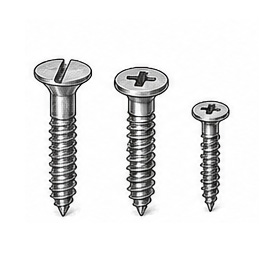
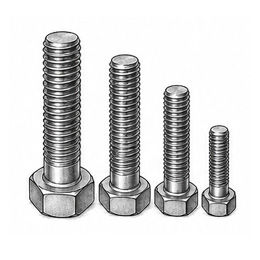
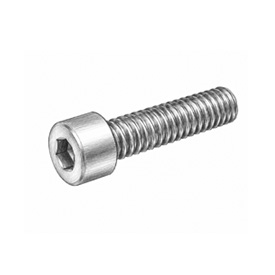
Different applications usually require different screw styles. Socket head cap screws are widely used in industrial machinery because they provide strong tool engagement and a compact head. Flat head screws are useful when the surface needs to be flush. Button head screws are often chosen for visible assemblies, low-profile fastening, or performance parts. Hex head screws are practical for heavy-duty industrial use where wrench access is available. Self tapping screws can be used in suitable sheet metal, plastic, or light-duty fastening applications.
Choosing Titanium Screws for Your Industry
The best titanium screw for an application depends on the service environment, load requirement, assembly design, material grade, and inspection standard. A marine project may focus mainly on corrosion resistance. An aerospace or racing project may focus on strength-to-weight ratio. A chemical equipment project may require careful review of the process medium. A medical or precision device project may place more importance on traceability, cleanliness, and dimensional control.
A reliable titanium screw supplier should be able to discuss both the product and the application. Material grade, thread design, head type, surface finish, and packaging should all support the final working condition. For complex projects, the safest approach is to share the drawing, sample, application environment, target quantity, and required documentation before production.
Work With a Titanium Screw Manufacturer
We manufacture and export titanium screws for marine, chemical, aerospace, medical, automotive, electronics, and industrial applications. With 33 years of fastener manufacturing and export experience in China, we support both standard titanium screws and custom titanium screws based on customer drawings, samples, or project requirements. If your project needs titanium screws for a demanding working environment, send us the screw type, material grade, size, drawing, quantity, and application background. Our team can help match the suitable titanium grade, screw design, surface finish, and inspection requirements for your industry.